
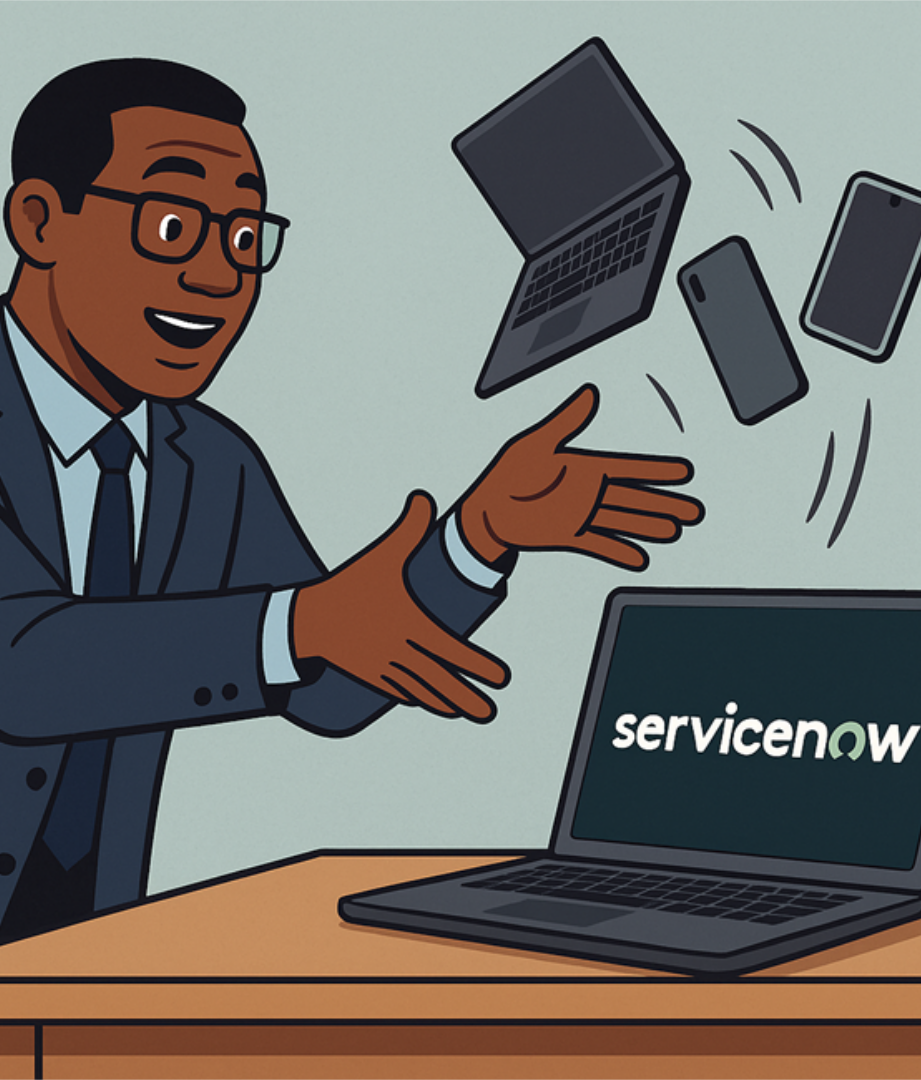
Get Your Assets in ServiceNow… Now!

|
Far too many organizations are not fully utilizing the native asset management capabilities within ServiceNow and this is a huge opportunity to finally get their asset management under control.
Bringing your assets into ServiceNow doesn’t just improve visibility; it transforms how your business operates. It empowers support teams, enables automation, and streamlines countless workflows. But the reality is that you can’t automate or manage what you don’t know exists. The first step in maximizing the value of your ServiceNow investment is getting your assets into the platform.
Here are three recommendations for organizations that haven’t centralized their asset data in ServiceNow yet:
1. Your Basic ITSM License Goes a Long Way
Many organizations mistakenly believe they need the Hardware Asset Management (HAM) or Software Asset Management (SAM) modules to start managing assets in ServiceNow. In reality, the baseline ITSM license includes powerful asset management features that are often underutilized.
You can:
- Use flat file uploads (CSV, Excel) to import assets
- Integrate with third-party systems like Intune, SCCM, or cloud providers like Azure or AWS
- Begin building a central system of record for asset visibility and traceability
At early stages of maturity, most organizations don’t need advanced workflows like RMA or depreciation schedules. What they do need is a trusted, accurate inventory. With that foundation, you unlock tracking, reporting, auditing, and, eventually, automation.
Example: If you have field technicians managing truck stock, ServiceNow can be configured with simple buttons (UI actions) or workflows to check devices in and out with ease. This kind of targeted enhancement brings immediate value without complex customization.
2. Consolidation Is Key
One of the biggest challenges we see is fragmented asset data across tools:
- Intune and SCCM for endpoint tracking
- AWS and Azure for cloud workloads
- Legacy systems still hanging around because of contract timelines
This fragmentation leads to manual reconciliation, siloed data, and inconsistent reporting. ServiceNow should become your single pane of glass, even if it means starting with integrations before a full migration.
We often work with customers to:
- Integrate with existing systems during contract runoffs
- Pull in flat files or establish API feeds
- Gradually migrate off legacy platforms while training staff in ServiceNow
The goal is to centralize asset visibility, even if your tools are still evolving. Consolidation doesn’t have to mean “all at once.” Start integrating now to gain visibility and phase out systems over time.
3. Align to the Platform—Don’t Force It to Align to You
ServiceNow is incredibly powerful out of the box. It comes with best practices, scalable data models, and extensive workflow capabilities. A common pitfall is trying to reshape ServiceNow to match legacy processes, ones that were often developed decades ago.
Instead, adapt your process to the platform. That means:
- Minimizing custom fields and unnecessary configurations
- Avoiding complex workarounds to replicate outdated practices
- Taking a consultative approach to challenge “the way we’ve always done it”
Example: A customer uses a 10-digit code to represent floor, building, and location, all because that’s how their spreadsheet worked 20 years ago. In ServiceNow, this can be simplified and aligned with modern data structures and reporting capabilities.
Over-customization increases long-term costs, reduces scalability, complicates training, and impacts upgradeability. Stick with native capabilities where possible, and only customize when there’s a real business case that outweighs the trade-offs.
Final Thought: Get Started Now
Even if you have contracts in place with other tools, or disparate systems you’re still using, begin integrating them into ServiceNow. Start treating it as your central asset visibility layer.
Why? Because everything else—automation, self-service, cost optimization, and lifecycle reporting—depends on knowing what you have and where it is.
You can’t manage what you can’t see. And you can’t automate what isn’t tracked. Getting your assets into ServiceNow is the first and most important step in unlocking the true potential of the platform.
So what are you waiting for? Get your assets in ServiceNow…Now!

Download Full Article

Be the First to Know
Subscribe to the newsletter and be notified of the latest articles released.